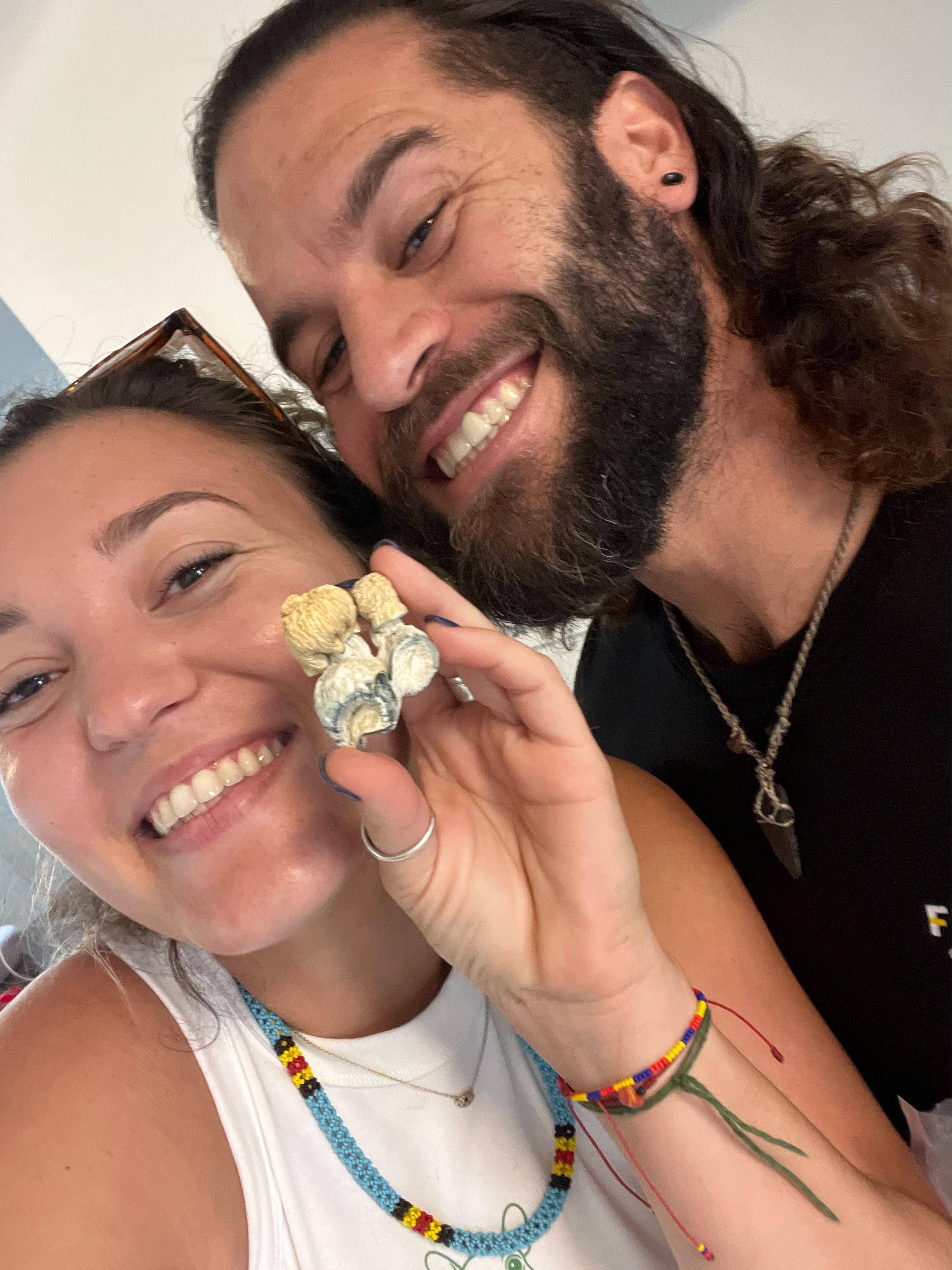
Psilocybin (mushrooms)
A naturally occurring compound known to support shifts in perception, emotional processing, and cognitive flexibility.

What It Is
Psilocybin is a naturally occurring compound found in certain species of mushrooms. When ingested, the body converts psilocybin into psilocin, which interacts with serotonin receptors in the brain, particularly the 5-HT2A receptor, associated with perception, cognition, and emotional processing.
Historically, psilocybin-containing mushrooms have been used in ceremonial and healing contexts across various cultures. Today, they are the focus of growing scientific research exploring their role in emotional wellbeing, mental health support, and cognitive flexibility.
Book a SessionBrain & Neuroplasticity
Psilocin, the active metabolite of psilocybin, interacts primarily with serotonin receptors, particularly the 5-HT2A receptor, which plays a central role in perception, cognition, and emotional processing.
Research shows that psilocybin may temporarily reduce activity in the default mode network (DMN), a network associated with self-referencing, rumination, and habitual patterns of thinking.
When this network quiets, functional connectivity across the brain increases, allowing regions that do not usually communicate to interact more freely. This may contribute to:
- expanded awareness and insight
- emotional release and processing
- shifts in perspective and belief systems
- a sense of interconnectedness
In addition, studies suggest that psilocybin promotes neuroplasticity, the brain's ability to reorganize and form new neural pathways. This may support changes in cognitive patterns, emotional regulation, and behavioral flexibility over time.
From a physiological perspective, psilocybin also appears to influence thalamic gating (how sensory information is filtered), which may help explain the increased sensory perception and altered meaning-making during the experience.
While the acute effects typically last several hours, research indicates that psychological and emotional effects may persist beyond the session, particularly when supported by proper preparation and integration.
Research in this area continues to evolve. This work is approached as a complementary practice, not a replacement for medical or psychological care.
How It Feels
Psilocybin produces a non-ordinary state of consciousness that unfolds gradually over several hours.
Experiences may include:
- visual patterns, colors, or symbolic imagery (hallucinations)
- altered perception of time and space
- emotional amplification
- deep introspection and reflection
This experience is often more narrative and visual, allowing the mind to process through imagery, memory, and association. Each journey is unique and shaped by the individual's state, environment, and intention.
As the experience unfolds, you may:
- cry or release emotions
- laugh or feel lightness
- move your body if needed
- speak or share, with awareness of others in the space

What to Expect
Sessions are generally held in a calm, comfortable environment.
You will typically:
- lie down in a relaxed position
- have the option to cover your eyes to go inward
- be supported by music, which helps guide the experience
The journey usually lasts 4+ hours, followed by a period of rest and grounding.
Each journey is unique, but the experience is typically immersive, introspective, and deeply influenced by your environment, mindset, and intention.
Group Awareness
In group settings, there is space for both individual and shared experience.
You are free to:
- remain inward and quiet
- or gently interact when appropriate
There is an emphasis on maintaining a respectful environment so each person can move through their process without disruption.
This is not about controlling the experience: but allowing it to unfold in a safe, supported, and grounded way.
Reframing "Bad Trips"
The term "bad trip" is often misunderstood.
Psilocybin does not create suffering: it reveals what may already exist beneath the surface.
Challenging moments may include:
- encountering suppressed emotions
- facing unresolved grief or trauma
- seeing patterns or behaviors clearly
- temporary loss of control
These experiences can feel intense, but are often the most meaningful. With proper support and integration, they are frequently described as breakthroughs rather than setbacks. Resistance may amplify discomfort: curiosity and surrender often soften it.
Why It Matters
Two key factors shape the experience:
Set: your mindset, emotional state, and intentions
Setting: the environment, people present, and overall atmosphere
A supportive set and setting:
- reduces distress
- increases safety
- allows for deeper, more meaningful experiences
This is why preparation and guidance are essential.

Who This Is For
This work may be suitable for:
- those seeking emotional clarity or insight
- individuals working through patterns or transitions
- those open to introspection and self-exploration
- people looking for a guided, supported experience
It is important to approach this work with readiness and respect for its depth.
Schedule an Intro CallAfter the Session
Physical Aftereffects
As the experience settles, the body begins to return to baseline.
You may notice:
- a natural return of appetite, often referred to as the "munchies"
- physical relaxation or light fatigue
- emotional openness or sensitivity
- a sense of calm or groundedness
These responses are normal and part of the body's way of recalibrating after the experience.
Integration Process
The experience does not end when the effects wear off. Integration is the process of bringing insights into daily life.
This may include:
- reflection and journaling
- somatic practices or breathwork
- lifestyle or relationship shifts
- continued emotional processing
Without integration, insights may fade. With integration, they become embodied and sustained.
If needed, a 1-hour integration call can be arranged to support this process.
Ways to Experience This Work
group
Larger group experiences (typically 6-8 people), held on specific dates (community sessions). These are generally held with full dosages.
circles
Larger group experiences (typically 4-8 people), held on specific dates (community sessions). These are generally held with microdoses.
Previous Work
This work is not about chasing an experience.
It is about creating the conditions for insight, release, and transformation to unfold safely.
What arises is not given: it is revealed.
What this work reveals is often described as a return, beyond identity, beyond narrative.
A direct experience of presence, oneness, and connection, what some may call Source, or simply a deeper awareness of self. This is not something added: but something remembered.
And the work continues in how it is integrated and lived afterward.